Facts and figures · Life
Assisted dying in Canada: the figures
See the numbers as a table
| Year | Assisted deaths |
|---|---|
| 2016 | 1,018 |
| 2017 | 2,838 |
| 2018 | 4,493 |
| 2019 | 5,665 |
| 2020 | 7,611 |
| 2021 | 10,092 |
| 2022 | 13,241 |
| 2023 | 15,343 |
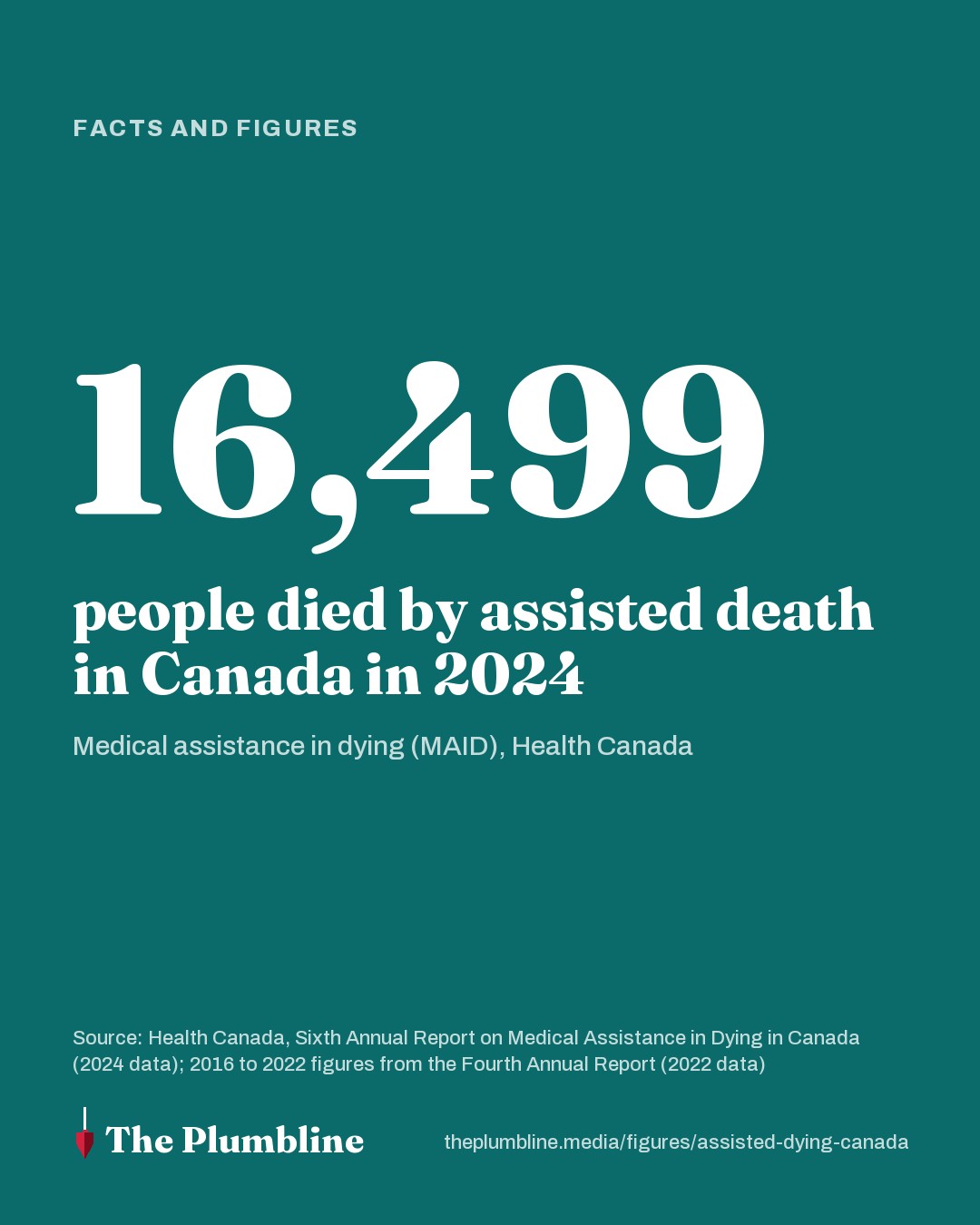
| 2024 | 16,499 |
What the figures don't show
Canada legalised medical assistance in dying (MAID) in June 2016; Québec began in December 2015. Before 2019, reporting to the federal government was voluntary, so Health Canada says the early figures should be read with caution. The 2016 figure covers only part of the year.
The figures count deaths, not requests. In 2024, Health Canada received 22,535 reports. Of those who asked, 4,017 people died of another cause before receiving MAID, and some withdrew their request.
The official forms do not ask whether a person felt pressured or felt they were a burden. Questions on disability, race and Indigenous identity were only added in 2023, and practitioners still leave many of them blank.
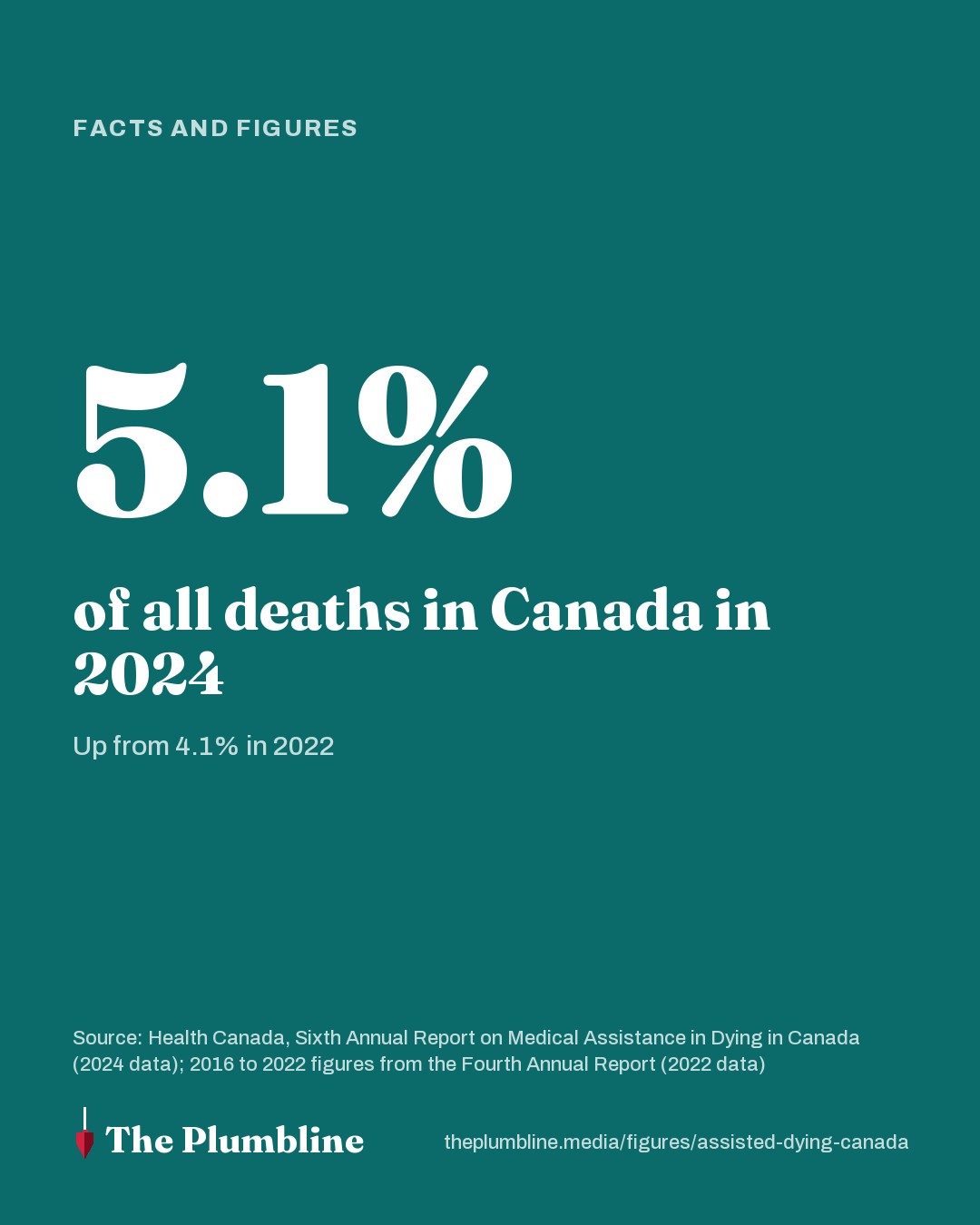
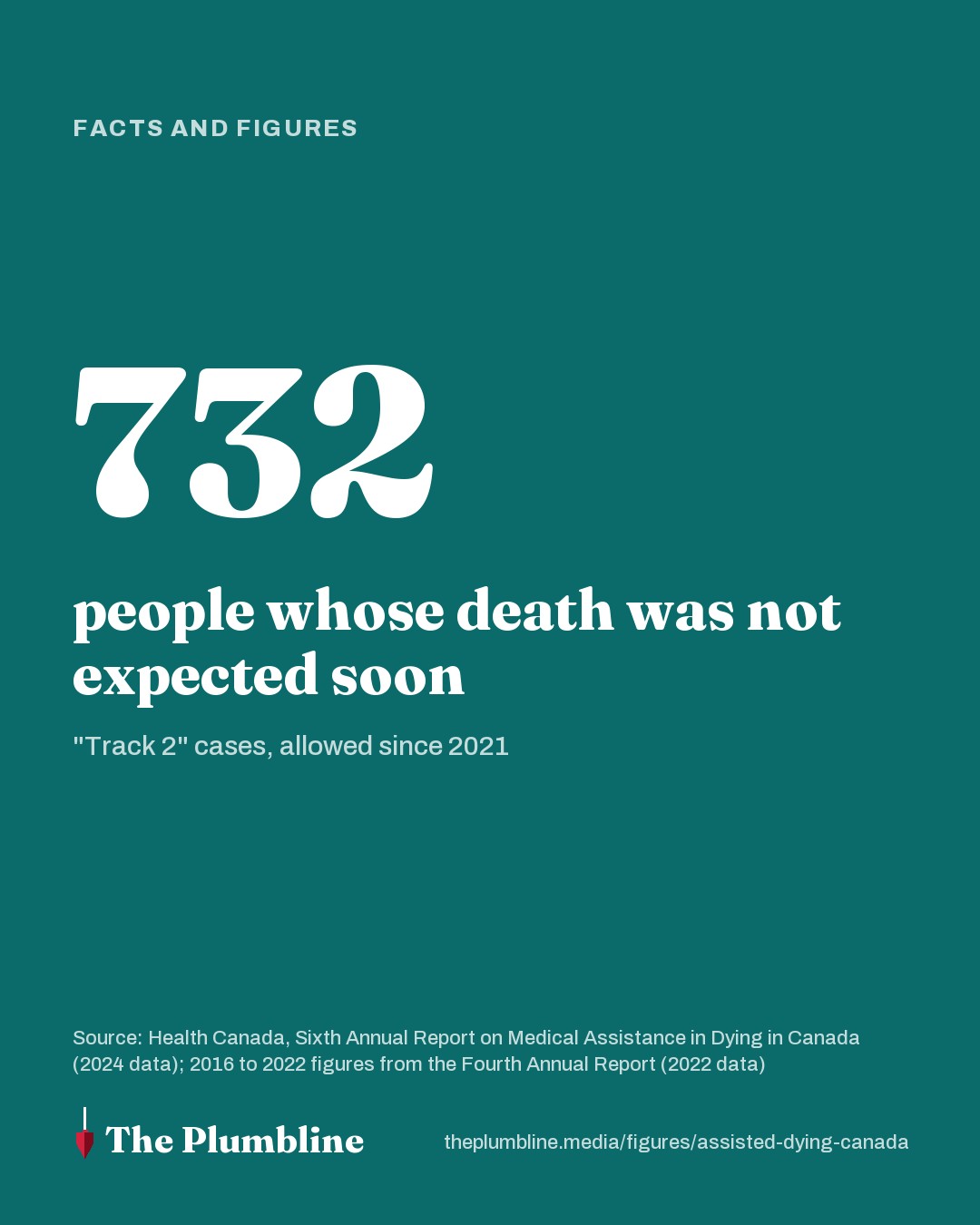
Canada's law is wider than the bill debated at Westminster. Since 2021 it has allowed MAID for people whose death is not reasonably foreseeable ("Track 2"). The figures here cover both tracks.
Where the figures come from
Use these figures: please credit The Plumbline and link to this page.