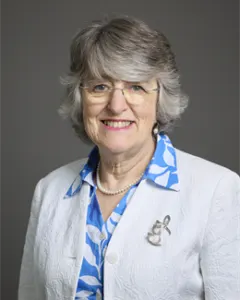
Crossbench
Baroness Finlay of Llandaff
Life peer, House of Lords
Spoke 93 times in 57 debates on our issues.
2026
Life · Debate
Terminally Ill Adults (End of Life) Bill
Pressure does not come only in the professions, though. A recent study of Dutch GPs reported that the majority of Dutch physicians feel pressured when dealing with a request for euthanasia or physician-assisted suicide—particularly emotional blackmail,...
Spoke 3 timesRead in Hansard
Life · Debate
Terminally Ill Adults (End of Life) Bill
We must not forget that there is a long history of health and social inequality in areas of Wales, with rurality creating many problems. My colleagues in palliative medicine across palliative care in Wales have described end-of-life care in Wales as being at...
Spoke 2 timesRead in Hansard
Life · Debate
Terminally Ill Adults (End of Life) Bill
My Lords, I have two amendments in this group. Amendment 139 simply requires the commissioner to report to Parliament, and in Amendment 913 I have tried to ensure the independence and freedom from bias of the commissioner and staff. The voluntary assisted...
Spoke 5 timesRead in Hansard
Life · Debate
Terminally Ill Adults (End of Life) Bill
However, Amendment 444A offers a compromise, because I am sure that many people will feel that six weeks is too short a timeframe. It suggests that the patient cannot have lethal drugs until they really are seen to be terminally ill and the clinicians are...
Life · Debate
Terminally Ill Adults (End of Life) Bill
The benefit of the amendments proposed by the noble Baroness, Lady Berger, is that they fit fair and square with the Title of the Bill, which is about terminally ill adults, and make it clear that this is about terminal illness and cannot be masqueraded as...
Spoke 5 timesRead in Hansard
Life · Debate
Terminally Ill Adults (End of Life) Bill
In Oregon, 92% of assisted death patients are recorded as being enrolled in hospice services. Palliative care needs assessment gives patients options to make an informed decision. The patient may conclude that there are other options that they have not been...
Spoke 2 timesRead in Hansard
2025
Life · Debate
Terminally Ill Adults (End of Life) Bill
In evidence to the Select Committee, we heard from the Royal College of General Practitioners, of which I declare I am a fellow, that any assisted dying service should be seen as a stand-alone, specialised service that GPs and other healthcare professionals...
Life · Debate
Terminally Ill Adults (End of Life) Bill
“The Commission does not accept that any of these forms of pressure could be a legitimate motivation for a terminally ill individual to seek an assisted death. Therefore, it is essential that any future system should contain safeguards designed to ensure, as...
Spoke 2 timesRead in Hansard
Life · Debate
Terminally Ill Adults (End of Life) Bill
This Bill is called the Terminally Ill Adults (End of Life) Bill. Every patient who is terminally ill has palliative care needs—100%. Some have them at a minor or relatively easily solved level, others have them at a major and complex level. I worry that we...
Spoke 2 timesRead in Hansard
Life · Debate
Crime and Policing Bill
Many struggle with the idea that the child is both a victim and a perpetrator at the same time. When it comes to the use, earlier on, of this loophole of claiming “reasonable chastisement”, it is important to remember that bruises do not show on skin of...
Family · Children's Wellbeing and Schools
Children’s Wellbeing and Schools Bill
Children are the fabric of the future, to paraphrase the excellent maiden speech from the noble Lord, Lord Mohammed. Legislating for the welfare of children is crucial, and we must take this opportunity to provide equal protection of children in law from...
2024
Freedom · Online Safety Act
Poverty Reduction
Perhaps in line with my noble friend Lord Bird’s philosophy, we recently debated the Online Safety Act. I congratulate the Government on taking this forward, as there is now much to do to make the internet safer, protecting children and adults from online...
2023
Life · euthanasia
Victims and Prisoners Bill
In major incidents, children are often secondary victims. When their parent or sibling is killed or injured, even if they were not present at the time, they will be a secondary victim. If a parent is a paedophile or they witness financial abuse in their...
Freedom · Debate
OFCOM (Duty regarding Prevention of Serious Self-harm and Suicide) Bill [HL]
I am also extremely grateful to the Government, officials from Ofcom and the noble Lord, Lord Grade, in particular, for the work they are doing to make sure that this scourge that happens to our young people is adequately tackled. We are in a strange position...
Freedom · Online Safety Bill
OFCOM (Duty regarding Prevention of Serious Self-harm and Suicide) Bill [HL]
The original Second Reading of this Bill was cancelled due to the sad death of Her Majesty the Queen. It now falls between Second Reading and Committee of the Government’s Online Safety Bill. In the spirit of co-operation called for by the noble Lord, Lord...
Spoke 2 timesRead in Hansard
2022
Life · abortion
Health and Care Bill
The last time we debated this I was concerned about contraceptive advice. I therefore contacted an abortion provider to ask about the contraceptive advice provided and was assured that really sound contraceptive advice is part of the telemedicine procedure....
Life · abortion
Health and Care Bill
The abortifacient tablets, to which my noble friend Baroness Watkins referred, are a separate step. It is inhumane to expect women to take those and then travel on a bus or even go in a taxi. Knowing what has happened before, I cannot help feeling that there...
Spoke 2 timesRead in Hansard
Life · assisted dying
Health and Care Bill
The claim has been made that palliative care is not a panacea. Assisted dying is not a universal panacea either. There is a 6.9% complication rate in Oregon, which is experimenting with the fourth drug cocktail in seven years. I remind the Committee, because...
2021
Freedom · Debate
Age Assurance (Minimum Standards) Bill [HL]
However, in their discussion, they were worried that age assurance could restrict their access to some social media, and therefore to friends. They feared losing access to some of their favourite platforms and social networks. They thought that some people...
Life · Debate
Assisted Dying Bill [HL]
Nothing in the Bill plugs deficits in care. The experience of other countries shows that palliative care does not flourish, nor do violent non-assisted suicide rates fall—they do not—when such legislation is in place. When explored, public support reveals...
Life · assisted dying
Covid-19: People with Neurological Conditions
Added to this, the messages from campaigners for assisted dying have been particularly frightening, controversial for some people and at times misleading, especially for those newly diagnosed and coming to terms with their illness. Specialist services do a...
Freedom · Online Harms
Domestic Abuse Bill
We cannot wait for the online harms Bill. Women up and down the country—[ Inaudible . ]
Family · family breakdown
Domestic Abuse Bill
The motivation behind this amendment is to ensure the safest environment in child contact cases, to allow regular contact between absent parents and children, and to ensure that appropriate safeguards are in place. All this amendment does is provide the...
Family · home schooling
Covid-19 Update
My Lords, with the emergence of new variants, questions over vaccine-induced antibody response to these and the risk of children as asymptomatic carriers, will the Government ensure that schools’ policies are flexible, adapted to each child’s needs, so that...
2020
Life · Debate
Abortion (Northern Ireland) (No. 2) Regulations 2020
My Lords, abortion is difficult; there are two lives. I welcomed David Steel’s law. I have resuscitated women after back-street abortions, assisted at vacuum abortions, shared the sadness at an aborted late foetus, signed abortion forms and supported many...
Life · Debate
Access to Palliative Care and Treatment of Children Bill [HL]
Let me make it clear: this has nothing to do with assisted dying. My Bill aims to solve two problems for the Government. The first is the ongoing variable access to hospice and specialist palliative care, with even less available out of hours. The second is...
2019
Life · abortion
Northern Ireland (Executive Formation) Bill
I did it also because the CEDAW recommendations go a little further than the current Abortion Act 1967, in which abortion is limited to up to 23 weeks and six days. After that, there is a requirement to report if an abortion has been undertaken for severe...
Spoke 2 timesRead in Hansard
Life · Debate
Suicide Act 1961: Prosecutions
My Lords, do the Government accept the evidence from jurisdictions that have changed the law? A recent paper from Holland shows that a majority of Dutch physicians feel pressure when dealing with requests for euthanasia or physician-assisted suicide, and...
2017
Life · Debate
Assisted Dying
Canada’s recent law, like the Netherlands’ and Belgium’s, includes euthanasia beyond terminal illnesses, with predictions of around one in 20 of all deaths through medically provided lethal drugs. That would equate to around 25,000 such deaths annually here....
2016
Life · assisted suicide
Right to Die
Do the Government recognise that, apart from the defeat of the Bill in the House of Commons, the BMA has undertaken an extensive study of end-of-life care? I declare an interest as a former president of the BMA and as someone involved in palliative care. The...
2015
Life · Debate
Access to Palliative Care Bill [HL]
I am saddened that some have tried to link this Bill with the debate on the Assisted Dying Bill. The House of Commons looked at the proposal for physician-assisted suicide very comprehensively and has spoken very clearly. That Bill is unsafe and should not be...
Life · organ donation
Mental Capacity Act 2005 (Select Committee Report)
In my closing time, I want to deal with best interest decisions, which are poorly understood. As the report highlights, there is confusion between best interest decisions and clinical decisions; families do not understand why they are not a proxy...
Life · deemed consent
Human Transplantation (Wales) Act 2013 (Consequential Provision) Order 2015
I must declare an interest as president of the BMA. Since 1999, it has been BMA policy that we should move to what is often called an opt-out or deemed consent process. Indeed, I was also part of the move to create the opportunity for preferential donation to...
Life · Debate
Assisted Dying Bill [HL]
Yet, in the face of all this evidence, we are being asked to consider legalising assisted suicide or assisted dying for people with a prognosis of six months. The only conceivable explanation is that that is what Oregon’s assisted suicide law says. However,...
Spoke 3 timesRead in Hansard
2014
Life · assisted dying
General Practitioners: Hippocratic Oath
Do the Government recognise that yesterday’s vote in the National Assembly for Wales that rejected the principles of the Assisted Dying Bill is compatible with the 77% of general practitioners who do not want that Bill to come in, and with the view of a high...
Life · Debate
Assisted Dying Bill [HL]
Let me give a cogent example. I was asked to see a man by a GP who said that the man was a clear case for euthanasia or assisted suicide but that he could not give him a lethal injection. That was the only reason the GP was referring him. The consultant...
Spoke 6 timesRead in Hansard
Life · Debate
Assisted Dying Bill [HL]
The signature of a second doctor provides no assurance. Who is going to find this second doctor? He or she is likely to be known to the first doctor as someone who sees physician-assisted suicide as a reasonable response to severe progressive illness. Let us...
Freedom · Online Safety Bill
Queen’s Speech
My Lords, like others I wish to focus on the protection of children and our duty to the most vulnerable in our society. The legislation on all child abuse, including female genital mutilation and slavery, must be as strong as possible if it is to be truly...
Life · Debate
Assisted Suicide
The policy that we are debating tonight was welcomed by all sides of the assisted suicide debate, but is now being criticised as chipping away at the current law on physician-assisted suicide—a means of assisted suicide which the medical profession as a whole...
2013
Life · assisted suicide
Health: End of Life
A clinician cannot go in two directions at once by striving to improve quality of life and revise and review, while simultaneously booking an appointment for death. Physician-assisted suicide is being placed in the comfort zone of medicine, suggesting to...
2012
Life · euthanasia
NHS: Death at Home
My Lords, for this timely debate, I draw on the information that I have from the Cicely Saunders research institute, of which I am an external international adviser, and my role in chairing the palliative care strategy board in Wales. The topic of licensing...
Life · Debate
Assisted Dying
Some claim the policy encourages amateur suicides. It does not. The policy recognises the asymmetric relationship between doctor and patient, with the patient dependent on professional advice and treatment and being very susceptible to nuances in the doctor’s...