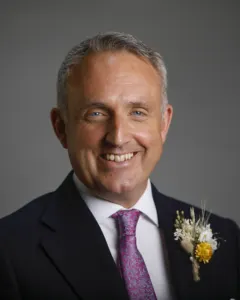
Liberal Democrat
Alex Cole-Hamilton
MSP for Edinburgh North Western, Scottish Parliament
2026
Freedom · Asked the Scottish Government
To ask the Scottish Government what programmes it has to respond to the reported decline in children's online safety.
Answer: The Scottish Government currently have a number of programmes in place and planned for the future to help create a safer online environment for children and young people. On 25 March 2026 the Online Safety Taskforce published its Action Plan which brings together our priorities for protection children and young people from online harm. This plan will continue to be built upon…
Life · Asked the Scottish Government
To ask the Scottish Government, regarding support available to people who experience two consecutive miscarriages, (a) what support is currently available, (b) how NHS boards are expected to implement it, (c) what monitoring is undertaken to assess compliance with national guidance, and (d) what assessment has been carried out regarding the consistent availability of support.
Answer: The Scottish Government Delivery Framework for Miscarriage Care in Scotland, published in February 2025, sets out a graded model of miscarriage care after one, two and three or more miscarriages and tasks NHS Boards with introducing this model of care in Early Pregnancy Services, backed by £1.5m funding to NHS Boards in 2025-26.NHS Boards have been asked to assess what their…
Life · Asked the Scottish Government
To ask the Scottish Government whether routine annual thyroid stimulating hormone (TSH) testing is recommended for adults with Down syndrome as part of annual health checks, regardless of whether the individual is currently prescribed thyroid medication.
Answer: Practitioners carrying out the annual health check are asked to action any blood tests that are needed and specifically advised to check on Thyroid Function Tests (TFTs) if the person has Down’s Syndrome. The health check also recommends that TFT screening is annual for people with Down’s Syndrome.
Life · Asked the Scottish Government
To ask the Scottish Government how GP practices are expected to support routine monitoring, such as blood tests, for adults with Down syndrome, and whether requiring families to request tests individually aligns with the intent of any national guidance.
Answer: Any tests or follow up required as a result of the annual health check will be actioned or arranged by the practitioner carrying out the health check. Families are not required to request tests individually as part of the Health Check. Out with the annual health check, any concerns regarding the health of a person with Down’s Syndrome should be highlighted with their GP in the…
2023
Life · Asked the Scottish Government
To ask the Scottish Government for what reason NHS Education for Scotland has reportedly been asked to support practitioners to complete annual health checks; whether it will provide the best practice information and guidelines for practitioners, including on the specific health needs of people with Down’s syndrome, and whether there will be consideration of distinct health checks, such as…
Answer: I refer the member to the answer to question S6W-19616 on 6 July 2023. All answers to written parliamentary questions are available on the Parliament’s website, the search facility for which can be found at https://www.parliament.scot/chamber-and-committees/written-questions-and-answers
Life · Asked the Scottish Government
To ask the Scottish Government whether the planned introduction of annual health checks for all people in Scotland with a learning difficulty will be tailored to each need, and whether it will specifically take account of the particular health needs of people with Down's syndrome.
Answer: Scottish Ministers issued National Directions on annual health checks, which state that the Scottish Health Check for Adults with Learning Disabilities documentation must be used in every health check. This documentation was tested and evidenced throughout the pilot phase and provides comprehensive best practice information and guidelines for practitioners, including on the…
Life · Asked the Scottish Government
To ask the Scottish Government whether it plans to introduce a Down's Syndrome Bill, similar to the Down Syndrome Act 2022 that was passed by the UK Parliament and extends to England and Wales.
Answer: The Scottish Government has committed to consulting on a Learning Disability, Autism and Neurodiversity Bill by the end of this year. The Bill will aim to ensure that the rights of people with Down’s Syndrome, among others, are respected and protected. An informal consultation took place last year as part of the scoping work for the Bill. The scoping report is available here…
Life · Asked the Scottish Government
To ask the Scottish Government what provision is made by NHS Scotland and NHS boards to launder personal items of clothing of people in hospital for protracted periods, particularly those being given end of life care.
Answer: Territorial NHS Boards have facilities for patients in long term care and provide laundering for those patients where they do not have relatives who can carry it out for them. Patients in an acute care setting are generally advised that they cannot have personal items laundered, but there is some variation between Boards in this regard. Please refer to Health Boards for their…
Society · Asked the Scottish Government
To ask the Scottish Government what it is doing to support victims of human trafficking who are trafficked to Scotland and forced to work or beg for their handlers.
Answer: Any form of human trafficking or exploitation is completely unacceptable. The Human Trafficking and Exploitation (Scotland) Act 2015, which was passed unanimously by the Scottish Parliament, gives police and prosecutors greater powers to detect and bring to justice those responsible for trafficking as well as strengthening protections for survivors. In the current financial…
2022
Life · Asked the Scottish Government
To ask the Scottish Government whether there is legislation in Scotland equivalent to Section 59 of the Anti-social Behaviour, Crime and Policing Act 2014, giving local authorities the power to make public spaces protection orders to help address any noisy behaviour in public spaces.
Answer: The Scottish Government is committed to tackling all forms of antisocial behaviour and recognises that this can blight people’s lives. Our national strategy is based on prevention, early intervention and diversionary activities. We recognise that no single approach will tackle all antisocial behaviour. That is why we support a suite of activities which includes Antisocial…
Life · Asked the Scottish Government
To ask the Scottish Government whether IVF treatment for unvaccinated women is being deferred due to the risks of contracting COVID-19 during pregnancy, and whether it will lift the age cap for women whose IVF treatment was disrupted due to the pandemic.
Answer: The recommendation that fertility treatment for unvaccinated patients be deferred at the current time was made on the grounds of safety. There is robust published evidence of increased risks of morbidity, risk of severe illness and poorer outcomes from COVID-19 for unvaccinated pregnant women and their babies (including preterm birth and stillbirth), increasing virus incidence…
2021
Life · Asked the Scottish Government
To ask the Scottish Government whether it plans to introduce Down syndrome legislation, similar to that introduced in the UK Parliament.
Answer: The Scottish Government wants to improve opportunities, outcomes and support for people with learning disabilities including Down’s Syndrome. To this end, we have committed to introducing a Learning Disability, Autism and Neurodiversity Bill as part of the Programme for Government. This Bill will ensure that the rights of people with Down’s Syndrome, among others, are…
Life · Asked the Scottish Government
To ask the Scottish Government when couples will be allowed to attend IVF appointments together as part of the easing of the COVID-19 restrictions.
Answer: Couples can attend together for all NHS IVF appointments, subject to local risk assessments and physical distancing requirements, which provide the best protection for patients and staff and ensure that services continue to be provided as the Covid-19 pandemic continues.
Family · Asked the Scottish Government
To ask the Scottish Government what advice is available to parents who are home schooling regarding preparing their children for National 5 assessments.
Answer: The Scottish Government recognises that remote learning arrangements present a number of challenges for young people, parents and carers, particularly those learners working towards National 5, Higher and Advanced Higher qualifications. We have been working intensively with national partners to ensure that our senior phase learners are provided with the clarity and the support…
2020
Family · Asked the Scottish Government
To ask the Scottish Government whether respite foster care is still able to take place under Level 4 COVID-19 restrictions.
Answer: Respite foster care can go ahead under Level 4 COVID-19 restrictions subject to the appropriate professional assessments being carried out. Care planning and issues surrounding care planning are a matter for local authorities to decide and we would expect local authorities to consider the risks of respite foster care before making any decision on a case by case base, whilst…
Faith · Asked the Scottish Government
To ask the Scottish Government, regarding the COVID-19 restrictions, whether children under the age of 12 count towards the limits set for congregation in places of worship.
Answer: Current restrictions allow a maximum number of 50 people to attend a place of worship within local authorities having protection levels 0 – 3 and no more than 20 people in level 4. These capacity numbers are inclusive of all children under the age of 12. The inclusion of children under 12 in the caps detailed above is currently under review, and any decision to revise this…
Family · Asked the Scottish Government
To ask the Scottish Government on what date mixed-sex couples will be able to register a civil partnership in Scotland.
Answer: The Civil Partnership (Scotland) Bill passed its final Stage in the Scottish Parliament on 23 June 2020. It received Royal Assent on 28 July 2020 and became an Act on that date. Since the Bill passed its final Stage in Parliament, the Scottish Government has been progressing the implementation work required to make mixed sex civil partnership available in Scotland. This work…
Society · Asked the Scottish Government
To ask the Scottish Government whether, under current COVID-19 guidance, indoor facilities such as changing rooms and toilets are accessible to people undertaking outdoor activities.
Answer: The use of changing rooms and showering facilities should be avoided where possible, although from the 31 August 2020 they may be made available for participants with disabilities or special needs or where required after an activity such as swimming. Sports facility operators may open toilets for public use if they follow the guidelines outlined on the Scottish Government…
Faith · Asked the Scottish Government
To ask the Scottish Government on what date marriages will resume in places of worship and civil settings as part of the easing of lockdown restrictions.
Answer: With effect from 15 July, Scottish Ministers removed the restrictions in the Health Protection (Coronavirus)(Scotland) Regulations 2020 affecting attendance at marriage ceremonies and civil partnership registrations, subject to the need to maintain physical distancing within the couple’s chosen venue. This means that it is now possible for a marriage ceremony or civil…
Faith · Asked the Scottish Government
To ask the Scottish Government for what reason it is limiting funerals in places of worship to 20 attendees, in light of normal Sunday services in the same venues being able to have up to 50 attendees.
Answer: I refer the member to the answer to question S5W-30834 on 12 August 2020. All answers to written parliamentary questions are available on the Parliament's website, the search facility for which can be found at http://www.parliament.scot/parliamentarybusiness/28877.aspx
Freedom · Asked the Scottish Government
To ask the Scottish Government whether its Race Equality Action Plan will take account of the recommendation in the BEMIS conference report, A Thematic Conference on Tackling Hate Crime and Prejudice Motivated by Racial and Religious Hatred, to set up an expert group that will examine how to integrate material in the curriculum for excellence on colonialism and how this impacts on society today.
Answer: On 20 March 2020 we published the Year 2 progress update on our Race Equality Action Plan. A final year report of this Plan will be published in 2021, which will include consideration of activity across all relevant portfolios. Scotland’s curriculum is not prescriptive. It provides teachers with a flexible framework through the experiences and outcomes. Education Scotland are…
2019
Society · Asked the Scottish Government
To ask the Scottish Government whether it will provide an update on actions in relation to gender recognition reform set out in the statement by the Cabinet Secretary for Social Security and Older People on 20 June 2019.
Answer: The Scottish Government has published a draft Gender Recognition Reform (Scotland) Bill today. The Bill is accompanied by Explanatory Notes and draft Impact Assessments, including a draft Equality Impact Assessment (EQIA). A full consultation on the Bill has also opened today. The consultation can be accessed and responses submitted online at…
Life · Asked the Scottish Government
To ask the Scottish Government how many cases of (a) pre-term births, (b) stillbirths and (c) maternal deaths attributed to (i) pre-eclampsia, (ii) eclampsia and (iii) HELLP syndrome were recorded in each NHS board in each of the last five years.
Answer: Information on the number of cases of pre-term births, stillbirths and maternal deaths attributed to pre-eclampsia, eclampsia and HELLP syndrome recorded in each territorial Health Board is not collected centrally. I have asked my officials to explore whether it is possible to collate this information from various relevant sources and I will write to you following receipt of…
Life · Asked the Scottish Government
To ask the Scottish Government what steps it is taking to reduce the number of cases of (a) pre-term births, (b) stillbirths and (c) maternal deaths attributed to (i) pre-eclampsia, (ii) eclampsia and (iii) HELLP syndrome.
Answer: The Scottish Government recognises that it is essential to ensure that pre-eclampsia is diagnosed and treated as soon as possible. As part of developing an evidence base in this area, NHS Lothian intends to take part in a trial which will look at the benefits of repeated placental growth factor (PlGF) testing in the care of pregnant women. Work on developing a Women’s Health…
Family · Asked the Scottish Government
To ask the Scottish Government, in light of Scotland's Domestic Abuse and Forced Marriage Helpline Annual Report 2017-2018, how it plans to help women who "feel unsupported and let down during legal proceedings" regarding child contact and residence arrangements.
Family · Asked the Scottish Government
To ask the Scottish Government, in light of Scotland's Domestic Abuse and Forced Marriage Helpline Annual Report 2017-2018, what action it will take in response to the finding that a quarter of people who contact the helpline reported that they were experiencing difficulties with housing issues.
Answer: We understand the impact of domestic abuse on survivors’ housing situation, whether they require emergency accommodation, temporary or permanent accommodation. We know that the National Helpline and the local services we fund through the Equally Safe Fund can provide support in this area, but we are clear that more needs to be done. We are funding Fife Council’s Improving the…
Family · Asked the Scottish Government
To ask the Scottish Government, in light of the Women's Aid report, The Domestic Abuse Report 2019, when it last considered how to ensure there is the best possible protection and support for people experiencing domestic abuse or forced marriage.
Answer: Preventing and eradicating all forms of violence against women and girls, including domestic abuse and forced marriage, is a priority for the Scottish Government. We are working collaboratively with COSLA and key partners to implement Equally Safe, our strategy in this area. We are committed to ensuring that women and children who have experienced domestic abuse have access to…
Society · Asked the Scottish Government
To ask the Scottish Government, further to the answer to question S5W-22255 by John Swinney on 27 March 2019, for what reason Education Scotland has published resources linking the history of the transatlantic slave trade to modern human trafficking.
Answer: As set out in the answer to S5W-21243 on 5 February 2019, the “People, Past Events and Societies” element of the curriculum provides teachers with the flexibility to choose topics which meet the needs of their pupils and this can include learning and teaching about the transatlantic slave trade. The educational resources referred to in the previous answer included issues…
Life · Asked the Scottish Government
To ask the Scottish Government how it ensures that abortion care meets the needs of women who are disabled, have ME or are refugees, and LGBTI people, as recommended in the Engender report, Our Bodies, Our Rights.
Answer: The Scottish Government believes all women in Scotland should have access to clinically safe and legal abortion services, within the limits that are currently set down in law, should they require it. It is our view that abortion care should be part of standard healthcare provisions, free from stigma. We continue to work with NHS boards on the provision and further improvement…
2018
Life · Asked the Scottish Government
To ask the Scottish Government what consideration it has given to providing funding to enable abortion clinics to provide their services free of charge to anyone regardless of their country of nationality or residency.
Answer: There are specific provisions, via amendments to the Functions of Health Boards (Scotland) Order 1991, which came into force in November 2017, that require NHS Boards in Scotland to provide access to abortion treatment free of charge for women resident in Northern Ireland. In addition, asylum seekers and refugees living in Scotland can also access abortion services free of…
Life · Asked the Scottish Government
To ask the Scottish Government what consideration it has given to making intimidation or harassment of abortion service users outside clinics or on common transport routes to these services illegal.
Answer: I refer the member to the answer to question S5W-16703 on 31 May 2018. All answers to written parliamentary questions are available on the Parliament’s website, the search facility for which can be found at http://www.parliament.scot/parliamentarybusiness/28877.aspx .
Life · Asked the Scottish Government
To ask the Scottish Government what consideration it has given to introducing safe zones around abortion service providers to enable those visiting to do so free of harassment or pressure regarding their decision.
Answer: The Scottish Government recognises that protests can often be distressing for women attending hospital and we are continuing to monitor any reports about anti-abortion protests and to consider whether there is further action that should be taken as a result.
Life · Asked the Scottish Government
To ask the Scottish Government what its position is on regulating abortion in the same way as other healthcare procedures and removing any aspect of its practice from criminal law.
Answer: The Scottish Government believes all women should have access to abortion services as part of routine care, and available free from stigma. I refer the member to the answer to question S5W-16699 on 31 May 2018. All answers to written parliamentary questions are available on the Parliament’s website, the search facility for which can be found at…
Life · Asked the Scottish Government
To ask the Scottish Government what its position is on the Royal College of Obstetricians and Gynaecologists' statement that “abortion services should be regulated; however, abortion - for women, doctors and other healthcare professionals - should be treated as a medical, rather than a criminal issue.”
Answer: The Scottish Government believes all women should have access to abortion services as part of routine care, and available free from stigma. I refer the member to the answer to question S5W-16699 on 31 May 2018. All answers to written parliamentary questions are available on the Parliament’s website, the search facility for which can be found at…
Life · Asked the Scottish Government
To ask the Scottish Government what consideration it is giving to changes to the Abortion Act 1967 as it applies in Scotland, in light of the devolution of abortion services in the Scotland Act 2016, and what discussions ministers have had with organisations regarding this issue since the commencement of the new powers.
Answer: The Scottish Government confirmed in its Programme for Government for 2016-2017 that it had no current plans to change the law on abortion. The Scottish Government’s priority in this area is to focus on improving abortion services for women. For example, this includes the October 2017 approval enabling women undergoing early medical abortion to take the second drug…
Life · Asked the Scottish Government
To ask the Scottish Government, in light of reports that hospices aim to match its plan to increase NHS pay, what discussions it has had with the hospice sector regarding what financial support it can offer so that hospices do not have to rely on asking for additional public donations or have to reduce services; whether it plans to provide such funding and, if so, how much.
Answer: Under the Public Bodies (Joint Working) (Scotland) Act 2014, it is the responsibility of Integration Authorities to plan and deliver services for their area using the integrated budgets under their control. This includes hospice and palliative and end of life care services. In April 2018, representatives from the Integration Authorities Chief Officers Group and Scottish…
Life · Asked the Scottish Government
To ask the Scottish Government whether its plans to provide free abortion services to women travelling from Northern Ireland will include (a) the ability for women to book services remotely and (b) providing funding, where necessary, for (i) travel and (ii) accommodation for (A) the patient and (B) an accompanying person.
Answer: All mainland NHS Boards are able to provide advice by phone to women living in Northern Ireland who are considering travelling to Scotland to access abortion services . Contact information can be accessed at; http://www.sexualhealthscotland.co.uk/pregnancy/abortion-services-in-scotland-for-women-who-live-in-northern-ireland. The Scottish Government recognises that women…
Life · Asked the Scottish Government
To ask the Scottish Government what gestational time limits are in place in each NHS board for the in-area provision of terminations of pregnancy under different grounds in the Abortion Act 1967, and whether it will publish this information to provide women with accurate information regarding their local healthcare provision.
Answer: This information is available on the Sexual Health Scotland website at http://www.sexualhealthscotland.co.uk/pregnancy/abortion via a link under the section entitled 'Where can abortions take place?'. All NHS Boards will ensure that women are referred to another provider for their termination if the gestation of their pregnancy exceeds these limits, up to the maximum gestation…
Life · Asked the Scottish Government
To ask the Scottish Government what plans it has to work with the English and Welsh governments to advise and advocate on the extension of the clinically safe, home use of abortion medication in their jurisdictions.
Answer: It is for the UK Government and Welsh Government to make decisions about the delivery of abortion services in England and Wales. The Scottish Government will continue to share information when appropriate about the Scottish approach to permitting misoprostol to be taken at home .
2017
Life · Asked the Scottish Government
To ask the Scottish Government how many (a) live births of children and (b) terminations of fetuses with Down's syndrome there have been in each year since 1999, and what information it has on records in previous years.
Answer: The number of (a) live births and (b) terminations of pregnancy with Down’s syndrome since 1999 are provided in Table 1a and Table 1b. For (a) live births, the data has been sourced from the Scottish Perinatal Infant Mortality and Morbidity Reports (SPIMMR), using data collated from the Scottish Stillbirth and Infant Death Survey. The last SPIMMR report published by ISD was in…
Life · Asked the Scottish Government
To ask the Scottish Government how many ground E abortions relating to cases of "serious handicap", the term used in the Abortion Act 1967, there were in each year between 2005 and 2015, broken down by (a) diagnosed condition and (b) gestational week of pregnancy.
Answer: The number of ground E abortions between 2005 and 2015 by (a) diagnosed condition and (b) gestational age is available in the following tables 1a and 1b. Statistical disclosure control has been applied to both tables because of the sensitive nature of the data and to reduce the risk of disclosing personally identifiable information. ISD Statistical Disclosure Control Policy is…
Life · Asked the Scottish Government
To ask the Scottish Government how many terminations after 24-weeks gestation have been performed in each year since the commencement of the Human Fertilisation and Embryology Act 1990.
Answer: The number of terminations after 24 weeks gestation (gestations of 24 weeks and over) from 1990 is displayed in Table 1. The number of terminations of pregnancy in some individual years is very small. Disclosure control measures have been applied because of the sensitive nature of the data and also to reduce the risk of disclosing personally identifiable information. Table1…
Life · Asked the Scottish Government
To ask the Scottish Government how many ground E terminations have been performed under the Abortion Act 1967 in each year since 1999, and what information it has on records in previous years.
Answer: The number of ground E terminations performed under the Abortion Act 1967 in each year since 1999 are presented in Table 1. Grounds for abortion have been recorded on the ISD Abortion database since 1991. Data are included on previous years in the annual termination of pregnancy report, with some tables showing data going back to 1968. For example, data from 1968 are available…
Life · Asked the Scottish Government
To ask the Scottish Government what steps it will take to ensure that the issues highlighted in the 2013 UK Parliamentary Inquiry into Abortion on the Grounds of Disability and, in particular, its finding that many parents are steered towards abortion and feel that they do not receive adequate information regarding other options, are not exacerbated by the introduction of cell-free DNA…
Answer: All pregnant women in Scotland are already offered a screening test for Down’s syndrome. If the screening test shows that the chance of having a baby with Down’s is high, women then have the option of having an invasive diagnostic test. The proposed change recommended by the UK National Screening Committee (UKNSC) is for Non-Invasive Prenatal Testing (NIPT) to be offered to…
Life · Asked the Scottish Government
To ask the Scottish Government what steps it is taking to support people with Down’s syndrome and their families.
Answer: The Scottish Government is committed to improving the lives of people with learning disabilities through the Keys to Life strategic outcomes. Down's Syndrome Scotland (DSS) is one of our key national delivery partners on our learning disability strategy. As Scotland’s only charity to work specifically with people with Down’s syndrome and their families, the Scottish Government…
Life · Asked the Scottish Government
To ask the Scottish Government how much it has invested in the last year in (a) Down’s syndrome (i) research and (ii) screening and (b) support for people with Down’s syndrome.
Answer: (a) i) The Scottish Learning Disabilities Observatory (SLDO) are one of the key strategic partners of the Scottish Government and are core funded through the Keys to Life Learning Disabilities strategy. Within their work plan, SLDO has investigated the fall in termination rates in Down syndrome pregnancies in Scotland, the most common additional physical health needs that…
Life · Asked the Scottish Government
To ask the Scottish Government what assessment it has made of the impact of cell-free DNA non-invasive prenatal testing techniques on (a) the medical profession’s and (b) society's attitude towards people with Down’s syndrome.
Answer: The UK National Screening Committee which advises Ministers and the NHS in all four UK countries about all aspects of screening, commissioned the Nuffield Council on Bioethics to produce a report considering the ethical values of recent and potential future scientific developments in Non-invasive Prenatal Testing (NIPT). The report was published on the 1 March 2017 and…
Life · Asked the Scottish Government
To ask the Scottish Government what action it is taking to tackle the assumption that mothers expecting a baby with a disability will want an abortion, in light of the private availability of new non-invasive pregnancy testing, which is set to detect higher numbers of babies with trisomy 13, 18 and 21.
Answer: Within the NHS there is absolutely no assumption that mothers expecting a disabled child will want to terminate the pregnancy. The Scottish Fetal Anomaly Screening Programme aims to ensure that women and couples are provided with high quality information so that they can make an informed choice about their screening options and pregnancy choices.
Freedom · Asked the Scottish Government
To ask the Scottish Government, further to the statement by the Cabinet Secretary for Communities, Social Security and Equalities on 13 June 2017 (Official Report, c. 12), whether it will provide an update on what progress it is making in fulfilling the cabinet secretary’s commitment to (a) engage with stakeholders on the prevention of online hatred and misogyny, (b) engage with stakeholders to…
Answer: We are committed to doing all that we can to prevent and eradicate hate crime and prejudice, and build community cohesion. As set out in my statement on 13 June and in our response to the Independent Advisory Group, the Scottish Government will now take forward an ambitious programme of work in response to their recommendations. The actions we have set out will be implemented…
Life · Asked the Scottish Government
To ask the Scottish Government what its response is to each of the recommendations in the Hospice UK report, Hospice care and care homes in Scotland, and what action it plans or is taking to implement these.
Answer: The Scottish Government supports the recommendations contained in the “Hospice care and care homes in Scotland” report. This report promotes closer working relationships between Scotland’s hospices and care homes to reduce inequalities and improve outcomes for those residing in care homes at the end of their lives, which is aligned with the aims of our Strategic Framework for…
Life · Asked the Scottish Government
To ask the Scottish Government how it will ensure that the aims of the Strategic Framework for Action on Palliative and End of Life Care are applied.
Answer: The Scottish Government is working with a wide range of stakeholders to take forward a £3.5million programme of work to achieve the ten commitments set out in the Strategic Framework for Action on Palliative and End of Life Care (SFA). The National Implementation Advisory Group (NIAG), which includes representatives from health, social care, independent and third sectors…
2016
Life · Asked the Scottish Government
To ask the Scottish Government how many meetings it has had with the (a) Consul General of China, (b) Chinese Government and (c) Communist Party of China since 20 November 2014; what future meetings are planned, and, in light of its international obligations, whether it has raised or will raise the issue of reported human rights abuses in China, including allegations of (i) forced organ…
Answer: I had a meeting with the Consul General at the Chinese Consulate on 14 September 2016, during which they discussed the strengthening relationship between Scotland and China. Scottish Government Ministers and officials meet regularly with the Consul General and other Consulate officials in order to further develop Sino-Scottish relations. There are currently no future meetings…
Life · Asked the Scottish Government
To ask the Scottish Government what training in end of life care is given to mental health practitioners.
Answer: All health professionals are expected to demonstrate through both work based learning and self-directed learning, the knowledge and skills in end of life care to satisfy the core competencies of their profession. The requirements and content of training curricula is a matter for the Royal Colleges and is approved by the General Medical Council as regulator of the medical…