MSPs

Conservative

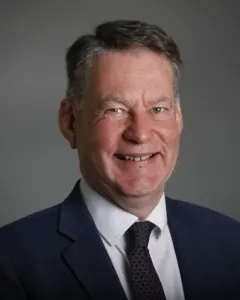
Murdo Fraser

Regional MSP for Mid Scotland and Fife, Scottish Parliament

Official profile on the Scottish Parliament website

2026

Family · Asked the Scottish Government

To ask the Scottish Government whether it will undertake a review of the impact of the Children (Equal Protection from Assault) (Scotland) Act 2019 on families and public services, in light of the Act having been in force for six years.

Answer: The Scottish Government has no current plans to undertake a formal review of the impact of the Children (Equal Protection from Assault) (Scotland) Act 2019. Work has been undertaken with a multi-disciplinary Implementation Group to consider the impact of the legislation and how this may be effectively monitored over time. We remain committed to ensuring that children are…

Full question and answer

Society · Asked the Scottish Government

To ask the Scottish Government what guidance it provides to local authorities and the General Teaching Council for Scotland on balancing teachers' responsibilities to demonstrate political impartiality in schools with their rights to hold and express protected religious beliefs under the Equality Act 2010, and what action it is taking to ensure that individuals working in the education sector are…

Answer: It is the General Teaching Council for Scotland’s responsibility as the independent professional registration and regulatory body for teachers in Scotland, to ensure teaching standards are upheld. GTCS, local authorities and professional associations, operate with appropriate independence, which the Scottish Government respects. This autonomy is an important feature of a…

Full question and answer

2020

Society · Asked the Scottish Government

To ask the Scottish Government, in light of the decision in the case of R Quincy Bell and A v. Tavistock & Portman NHS Trust & others in the English High Court, what steps it will now take to review the provision of services for children with gender dysphoria, including the prescription of puberty blockers.

Answer: Whilst the ruling from the High Court on 2 December has no formal status in Scotland we are examining it with intent. The law in Scotland on the capacity of young people to consent to medical treatment is different to that in England and Wales. Under the Age of Legal Capacity (Scotland) Act 1991, a person under 16 can consent to a medical procedure or treatment where the…

Full question and answer

Faith · Asked the Scottish Government

To ask the Scottish Government for what reason hospitality venues will be permitted to open to the public in July 2020, but not places of worship.

Answer: We recognise how difficult it has been for Scotland’s faith communities to be unable to come together in places of worship at this challenging time. This was of course necessary due to the pandemic and I appreciate the understanding and patience our faith communities have shown in abiding by restrictions, which have been vital to ensure safety and stop the spread of the virus…

Full question and answer

Society · Asked the Scottish Government

To ask the Scottish Government what assessment it has made of the long-term health impacts, both physical and mental, of prescribing puberty blockers to children.

Answer: As indicted in the answers to S5W-27279 and S5W-27280 on 20 February 2020 and S5W-27281 on 9 March 2020 the term “Puberty Blockers” is non-specific and could be applied to a range of medicines used for a variety of conditions. For example in children whose puberty started abnormally early, to promote the development of long bones and increase adult height in children of short…

Full question and answer

Society · Asked the Scottish Government

To ask the Scottish Government what provision the NHS has made for future damages claims from adults who were inappropriately prescribed puberty blockers as children.

Answer: As indicted in the answers to S5W-27279 and S5W-27280 on 20 February 2020 and S5W-27281 on 9 March 2020 and S5W-27282 on 14 April 2020 the term “Puberty Blockers” is non-specific and could be applied to a range of medicines used for a variety of conditions. For example in children whose puberty started abnormally early, to promote the development of long bones and increase…

Full question and answer

Society · Asked the Scottish Government

To ask the Scottish Government what the cost to the NHS has been of prescribing puberty blockers in each of the last five years.

Answer: The information requested is not held centrally. The term “Puberty Blockers” is non-specific and could be applied to a range of medicines used for a variety of conditions. For example in children whose puberty started abnormally early, to promote the development of long bones and increase adult height in children of short stature and children diagnosed with gender dysphoria.

Full question and answer

Society · Asked the Scottish Government

To ask the Scottish Government how many children have been prescribed puberty blockers in each of the last five years.

Answer: The information requested is not held centrally. The term “Puberty Blockers” is non-specific and could be applied to a range of medicines used for a variety of conditions. For example in children whose puberty started abnormally early, to promote the development of long bones and increase adult height in children of short stature, and children diagnosed with gender dysphoria.

Full question and answer

Society · Asked the Scottish Government

To ask the Scottish Government on what clinical basis children are being prescribed puberty blockers.

Answer: As indicated in answers to PQ 27279 and 27280 on 20 February 2020 the term “Puberty Blockers” is non-specific and could be applied to a range of medicines used for a variety of conditions. For example in children whose puberty started abnormally early; to promote the development of long bones and increase adult height in children of short stature and children diagnosed with…

Full question and answer

2014

Life · Asked the Scottish Government

To ask the Scottish Government in which NHS boards are waiting times for IVF treatment lower than one year, and, in light of its policy that boards in this position should provide three full cycles of treatment, which provide this and when it expects all to do so.

Answer: Information Services Division published the first IVF Waiting Times for patients who were screened for IVF treatment during the period July to September 2014, in November 2014. This shows that 13 out of 14 NHS boards in Scotland are meeting the maximum 12 month target for IVF, ahead of the 31 March 2015 target date. A copy of the publication is available using the following…

Full question and answer

Life · Asked the Scottish Government

To ask the Scottish Government what estimate it has made of the costs associated with funding a third full cycle of (a) IVF treatment and (b) intracytoplasmic sperm injection.

Answer: The National Infertility Group, chaired by a Health Board Chief Executive, and whose members include senior infertility consultants, senior infertility nurses, senior planners, and the patient stakeholder group Infertility Network Scotland, reconvened in December 2014. The expert group will, as part of the 2015 review, reflect on the implementation of access criteria changes…

Full question and answer

Family · Asked the Scottish Government

To ask the Scottish Government which of the books recommended by Stonewall Scotland for use in primary schools (a) it and (b) Education Scotland has approved since the Marriage and Civil Partnership (Scotland) Act 2014 came into force.

Answer: The Scottish Government and Education Scotland do not approve books or texts for the teaching of relationships, sexual health and parenthood education. It is up to local authorities and schools to determine what are the best resources to use in their circumstances.

Full question and answer

Family · Asked the Scottish Government

To ask the Scottish Government what materials and publications (a) it and (b) Education Scotland has approved or recommended to teach about same-sex marriage in primary schools since the Marriage and Civil Partnership (Scotland) Act 2014 came into force.

Answer: The Scottish Government and Education Scotland do not approve materials or publications for the teaching of relationships, sexual health and parenthood education. It is up to local authorities and schools to determine what are the best resources to use in their circumstances.

Full question and answer

Family · Asked the Scottish Government

To ask the Scottish Government, following the passing of the Marriage and Civil Partnership (Scotland) Bill, whether it considers that no teacher should be required to use materials that actively promote a particular view of marriage.

Answer: All teachers in Scotland are expected to adhere to the General Teaching Council of Scotland’s Code of Professionalism and Conduct, which sets out the key principles and values for registered teachers in Scotland. In particular, Part 5 on equality and diversity emphasises the need for teachers to be non-judgmental, and to recognise their status as role models within the school…

Full question and answer

Family · Asked the Scottish Government

To ask the Scottish Government, following the passing of the Marriage and Civil Partnership (Scotland) Bill, whether teachers and pupils are free to openly and clearly express any disagreement with same-sex marriage in schools.

Answer: I refer the member to the answer to question S4W-19983 on 13 March 2014. All answers to written parliamentary questions are available on the Parliament’s website, the search facility for which can be found at: http://www.scottish.parliament.uk/parliamentarybusiness/28877.aspx.

Full question and answer

Family · Asked the Scottish Government

To ask the Scottish Government, following the passing of the Marriage and Civil Partnership (Scotland) Bill, what its position is on whether teachers who disagree with same-sex marriage should be pressurised to promote same-sex marriage in the classroom.

Answer: I refer the member to the answer to question S4W-19983 on 13 March 2014. All answers to written parliamentary questions are available on the Parliament’s website, the search facility for which can be found at: http://www.scottish.parliament.uk/parliamentarybusiness/28877.aspx.

Full question and answer

Family · Asked the Scottish Government

To ask the Scottish Government, following the passage of the Marriage and Civil Partnership (Scotland) Bill, whether it considers that no teacher has a duty to promote or endorse a particular view of marriage nor will have under any revised guidance in the future.

Answer: I refer the member to the answer to question S4W-19983 on 13 March 2014. All answers to written parliamentary questions are available on the Parliament’s website, the search facility for which can be found at http://www.scottish.parliament.uk/parliamentarybusiness/28877.aspx.

Full question and answer

Life · Asked the Scottish Government

To ask the Scottish Government which datasets it would consult in the case of an early review of IVF access criteria.

Answer: As indicated in the Scottish Parliament on 29 January 2014 during Portfolio Question Time, if sufficient robust data is available, the Scottish Government is content for an earlier IVF review to take place and for views to be submitted to the Scottish Government by the end of 2014. Datasets which will be used for this process are currently under consideration.

Full question and answer

2013

Family · Asked the Scottish Government

To ask the Scottish Government, if same-sex marriage was introduced, what its position is on whether it would be appropriate for public sector employees who oppose it to have their employer question them on their commitment to equality and diversity.

Answer: Public sector employees are entitled to have their own personal beliefs on same sex marriage and the Government would consider it inappropriate for public sector employers to question employees on their commitment to equality and diversity based solely on their belief that marriage should be between a man and a woman. The Government fully appreciates that some public sector…

Full question and answer

Family · Asked the Scottish Government

To ask the Scottish Government, if same-sex marriage was introduced, what its position is on whether (a) people, (b) churches and (c) other organisations that oppose it should be entitled to (i) hire publicly-owned facilities and (ii) provide services in partnership with public bodies.

Answer: The Government discussed the point about religious bodies against same sex marriage being denied the use of public premises in the second consultation on same sex marriage, at paragraphs 62 to 65 of Annex A: http://www.scotland.gov.uk/Publications/2012/12/9433/272398. The Government considers that any local authority (or other public body) which refused to let premises to any…

Full question and answer

Family · Asked the Scottish Government

To ask the Scottish Government, if same-sex marriage was introduced, what its position is on whether it would be appropriate for (a) prospective and (b) current foster carers who oppose it to have their suitability to provide such care questioned; whether it considers that it would be appropriate to ask them their views on the matter, and under what circumstances it considers that opposition to…

Answer: The key issue in relation to fostering is the welfare of the child. It would not be appropriate for prospective and current foster carers who oppose same sex marriage to have their suitability to foster children questioned just because of opposition to same sex marriage. Persons opposed to same sex marriage who are seeking to foster children must, like anybody else…

Full question and answer

Family · Asked the Scottish Government

To ask the Scottish Government whether it will amend the Marriage and Civil Partnership (Scotland) Bill to state that the current definition of marriage is a belief worthy of respect in a democratic society.

Answer: No. We do not consider such an amendment is necessary. There is nothing in the Bill which would stop persons from holding that belief. In addition, section 14 of the Bill provides that the introduction of same sex marriage will have no impact on existing rights to freedom of speech.

Full question and answer

Society · Asked the Scottish Government

To ask the Scottish Government whether it will seek to amend the Equality Act 2010 to (a) include in the protected characteristic of religion or belief, support for the current definition of marriage and (b) ensure that people opposed to same-sex marriage should not experience any detriment because of their views.

Answer: No. The Scottish Government fully respects the belief held by many people and organisations that marriage can only ever be between a man and a woman. However, we would not support an amendment to the protected characteristic of religion or belief in the Equality Act 2010 to make specific provision on beliefs about marriage. Adding a specific amendment to the protected…

Full question and answer

Family · Asked the Scottish Government

To ask the Scottish Government, if same-sex marriage was introduced, what its position is on whether it would be appropriate for public sector employers to take into account the views on this of (a) applicants for posts and (b) staff when considering their suitability for employment.

Answer: The Government considers that public sector appointments should be based on merit and not on any views which applicants and staff may have on same sex marriage. Local authorities and public bodies are subject to the Equality Act 2010 and, as such, are directly prohibited from discriminating against any person because of their religion or belief. In addition, the Human Rights…

Full question and answer

Family · Asked the Scottish Government

To ask the Scottish Government whether it will amend the Charities and Trustee Investment (Scotland) Act 2005 to specify that organisations opposed to same-sex marriage will not fail to meet the charity test because of this view.

Answer: No. We do not consider such an amendment is necessary. Section 7 of the Charities and Trustee Investment (Scotland) Act 2005 provides that a body meets the charity test if its purposes consist only of one or more of the charitable purposes and it provides public benefit. One of the charitable purposes laid down in section 7 of the 2005 Act is the advancement of religion…

Full question and answer

Life · Asked the Scottish Government

To ask the Scottish Government what the (a) upper and (b) lower age limit is for access to IVF treatment, broken down by NHS board.

Answer: For information on the upper age limit for IVF treatment, by NHS Board, I refer the member to the answer to question S4W-13477 on 15 March 2013. All answers to written parliamentary questions are available on the Parliament’s website, the search facility for which can be found at: http://www.scottish.parliament.uk/parliamentarybusiness/28877.aspx. There is no lower age limit…

Full question and answer

Life · Asked the Scottish Government

To ask the Scottish Government how many couples were on a waiting list for IVF treatment on 1 January (a) 2008, (b) 2009, (c) 2010, (d) 2011, (e) 2012 and (f) 2013, broken down by NHS board.

Answer: This information is not currently collected centrally. The National Infertility Group was set up in April 2010 to address the inequity of access to infertility treatment across Scotland. The Group’s report, with final recommendations, including a recommendation on data collection, is currently with Ministers for consideration.

Full question and answer

2012

Life · Asked the Scottish Government

To ask the Scottish Government by what process it will consider and implement the National Infertility Group’s recommendations on IVF.

Answer: The National Infertility Group will submit its report, with recommendations, to Ministers by the end of December 2012. Ministers will consider these recommendations and any proposals for implementation, to ensure equity of access to IVF treatment for eligible patients across Scotland.

Full question and answer

2011

Society · Asked the Scottish Government

To ask the Scottish Executive what information it holds regarding the incidence of mental illness among the lesbian, gay, bisexual and transgender (LGBT) communities compared to the general population.

Answer: Information on the incidence of mental illness among the lesbian, gay, bisexual and transgender (LGBT) communities in the Scottish population is not collected. However, research shows that LGBT people experience higher levels of mental illness, including higher rates of suicide and self-harm, than the general population. The Scottish Government is currently funding the LGBT…

Full question and answer

Society · Asked the Scottish Government

To ask the Scottish Executive what advice it gives to NHS boards regarding their obligations to the lesbian, gay, bisexual and transgender (LGBT) communities under the Equality Act 2010.

Answer: To prepare NHS boards for the implications for the Equality Act 2010, including their obligations to LGBT people, a series of 13 one day sessions were held between January and March 2011 which were supported by NHS Health Scotland. The sessions were aimed at decision makers within NHS boards responsible for service design and delivery and for whom the implications of the…

Full question and answer

Society · Asked the Scottish Government

To ask the Scottish Executive how the mental health concerns of the lesbian, gay, bisexual and transgender (LGBT) communities are addressed in the training of medical professionals.

Answer: The lesbian, gay, bisexual and transgender (LGBT) communities share mental health problems which are also present in the wider community, and which are well covered in the curriculum for both undergraduate medical students and the postgraduate medical trainees most likely to treat patients with these mental health problems. Equality and diversity is specifically covered in…

Full question and answer

Society · Asked the Scottish Government

To ask the Scottish Executive what advice it gives to NHS boards regarding the provision of mental health services for the lesbian, gay, bisexual and transgender (LGBT) communities.

Answer: I refer the member to the answer to question S4W-174 on 2 June 2011. All answers to written parliamentary questions are available on the Parliament’s website, the search facility for which can be found at http://www.scottish.parliament.uk/Apps2/Business/PQA/Default.aspx.

Full question and answer